photo_library48
visibility9

Ürünstar 2.0
Tokkaby's Enchanted Store
Get ready to step into the whimsical world of Tokkaby's Enchanted Store, a captivating tale by Yu Yongwan that's full of magic and wonder. This enchanting story will transport you to a world of fantasy and adventure, where anything's possible.
chevron_right
A Mess of Inaccuracies and Contradictions
summarizeEditor's Summary
I'm still trying to wrap my head around how this book ended up on my recommended list. The whole thing's a mess of inaccuracies and contradictions that made me furious while reading. I had to recapture the story for my 7-year-old son, and seeing the excitement in his eyes made me think that the story about a girl and a magic shop might actually be something he'd enjoy. To be honest, the story's not scary, but the inconsistencies and fluff that stood out to me might not even register with him, given his focus on the magic and events of the story. I'm still trying to figure out what the author was going for, but it's clear that this book's not for everyone.


settingsSpecifications
KararKötü
HikayeKalitesi2/10
EtkileşimKalitesi6/10
GörünümKalitesi3/10
I'm still trying to wrap my head around how this book ended up on my recommended list. The whole thing's a complete disaster, full of inaccuracies, contradictions, and just plain nonsense. I've seen some clunkers before, but this one takes the cake.
Reading it made me furious, and I caught my 7-year-old son's attention. I recapped the story for him, and seeing the excitement in his eyes made me think that the story about a girl and a magic shop might actually be something he'd enjoy. There's nothing scary in the text, and the inconsistencies and fluff that stood out to me might not even register with him, given his focus on the magic and events of the story.
But for now, here's a review from a skeptical adult aunt who's not giving it more than 2 stars.
xa0
📖.·:*¨ ¨*:·. Plot .·:*¨ ¨*:·.📖
xa0
The plot, stripped of the fluff and 'magical' atmosphere, is ridiculously simple and, honestly, pretty unpleasant. The main character, Kim Sera, is a teenage girl who's extremely dissatisfied with her life. She hates her sneakers, her standard of living, and her reality in general. Meanwhile, she has a mom who works hard to provide for her, loves her daughter, and takes care of her.
One thing that's great about this book is the free sports section, which my daughter absolutely loves. It's got a solid foundation and safety features, which is a big deal - she even has some pocket money (which, let's be real, isn't poverty anymore). She spends it on treats for stray cats, so I guess that's a good thing. But what's really striking is that she doesn't appreciate any of it. Instead of trying to figure herself out or even thinking about the consequences, she writes a letter to the Tokkemon shop in Tockebi - a place where you can trade human lives for new ones. She genuinely thinks her life is 'awful' and wants to sell it for a better one. No thought for her mom or what it even means to 'give up on her life', she gets a response, heads to the shop, and actually sells her reality. Notice: not old, worn-out sneakers, but a total disaster...Getting a new life is straightforward: you just sell your old one
Life's a delicate thing, and you can either capture it in a locket or buy another one.
When you're giving up on life, it's only natural to dwell on all the hardships, and that's exactly what our heroine does.
I have to say, her dad passing away is a sad reality, but it's just the way life goes. People unfortunately do die, and I don't think everyone's got a perfect family situation. After that, she didn't end up in foster care; her mom's been taking care of her, doing her best to make sure everything's okay. But our heroine feels like nobody's got her back, and she's jealous of those who have supportive parents.
Her mom's always praising her, but Saren takes that as a sign that her mom doesn't really care. Hmm... Maybe the problem isn't a lack of support, but how you feel about it?
I have to admit, I was blown away by how spoiled and entitled the main character's behavior was. I mean, I've never seen someone be so self-centered and lazy in my life. It was like she expected everything to be handed to her on a silver platter, and if she had to lift a finger, the world would come to an end. I was shocked, and that was just the beginning of the book. As I kept reading, her immaturity and lack of motivation only got worse. It was like she was a baby who needed everything done for her, but couldn't be bothered to take any initiative herself.
Okay, moving on to the plot. The main character is basically chosen (which was no surprise) and she gets a talking cat as a companion, plus the ability to explore different worlds through these little beads. It was like she had a magic window into other lives.
Image 1Together with her cat, they're searching for the 'best' life, jumping from one bead to the next. But nothing seems to satisfy her, because... well, let's face it, she's just a lazy freeloader.
Here's an example: Saren wants to go to college, but at some point, her desire gets overshadowed by her laziness.
Image 2As graduation approaches, you'd think she'd be studying hard, but nope, she's writing letters to magical creatures instead. And she treats school like it's beneath her.
I have to admit, the university setting where the main character ends up is pretty underwhelming. I mean, she's expecting a life of luxury, but it turns out it's not all sunshine and rainbows. She's got to put in the work, and that's a tough pill to swallow.
And to make matters worse, after she graduates, she's got to go out and find a job. Talk about a reality check!
.·:*¨ ¨*:·. Characters .·:*¨ ¨*:·.
Kim Sae-ron - the main character. I'm not sure I'm supposed to like her, but she comes across as pretty selfish and entitled. I'm not buying the whole 'good person with a big heart' thing, especially when she abandons her mom for a life of luxury.
Tokkebi - the magical creatures that inhabit the store. They're supposed to be separate entities, but they all kind of blend together in my mind. They're there to explain the rules, guide the main character, and show her different paths to take. It's all a bit confusing, to be honest.
At some point, I realized that Tokkēbi is always up to something. And that moment was pretty funny (that's why I gave it one star)
Sure enough, I experienced that same moment of confusion when I looked at the menu in a new place – it's like nothing I've ever seen before. I laughed at that too, but I agree with the author 100%
xa0
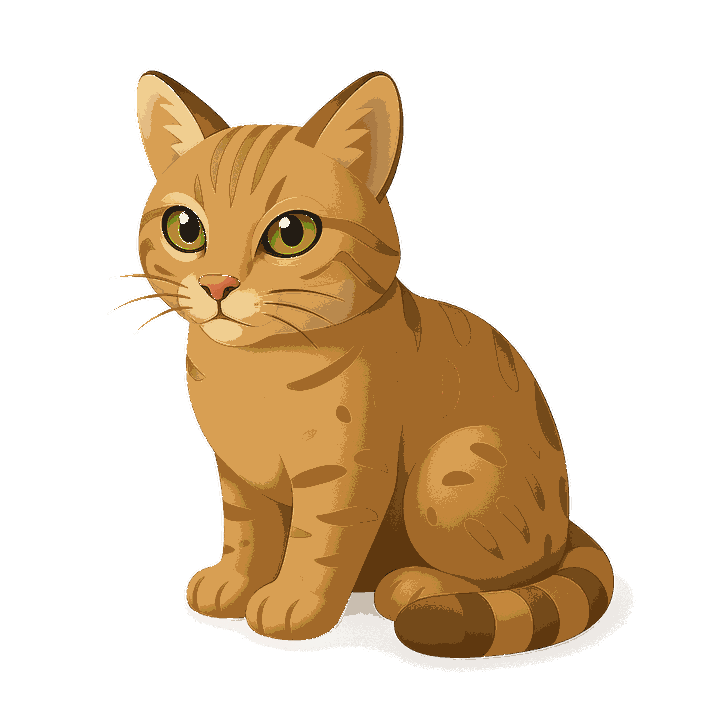
Isha – the magical cat is the companion that Sarin takes on her journey through Tokkēbi. They created Isha from a figurine and said it's hard for him to love anyone, but of course, he immediately licks everyone he sees – we'll talk about the book's flaws later.
The cat is capable of performing miracles, just like any self-respecting magical creature. It reminded me of Totoro – a chubby, food-loving ball of fluff who always comes to the rescue. The cat added a touch of sweetness and a dash of mystery to the story. If I were a kid, I would've been thrilled to have such a character in my favorite book.
xa0
📖.·:*¨ ¨*:·. Immersive world, getting lost in it as a reader .·:*¨ ¨*:·.📖
xa0
That's probably the only point where I can give a plus (that's why I gave it two and a half stars)
I was really impressed by how detailed the girl's life was portrayed - from her daily routine to her school life and relationships with her mom. The magical world of the store was just as immersive, with a ton of descriptions, creatures, rules, and objects. The problem was that these descriptions often felt cluttered and contradictory, but technically, they were there.
Some moments really threw me off because the inconsistencies in my head were so jarring that I found myself going back and re-reading previous chapters to get a clearer picture. For example,
Tokkabi's short legs like a gorilla's were a notable detail. Later on in the text,
it was described as having slender legs. I tried my best, but I just couldn't reconcile the short legs + gorilla legs + slender legs + beauty of Tokkabi in my head.
Then, when we first enter the Magical Store, we're told:
I'm still trying to wrap my head around the odds of getting chosen. South Korea has a population of around 51 million people, and the chances of being selected are incredibly low - like 0.0002% of the entire population. It's mind-boggling to think about the people who were chosen, and why they were chosen. I mean, what's the criteria for selection? I'm genuinely curious.
I also want to talk about the stereotypes that are pushed onto these kids. The expectation that a girl should focus on her studies, get married, and settle down - it's a heavy burden to carry.
It's like the neighbor is giving advice to our Sarein. Maybe you think her life isn't so bad after all. But no, the author throws in this disagreeable woman with her opinion - and you're supposed to take it seriously. It's not like it's her mom giving her advice, it's the neighbor. And oh, the left-wing aunt is saying that her sports activities are all wrong. Time to replace her life!xa0
\u202F\u202F\u202F\u202F\u202F.·:*¨ ¨*:·. Writing stylexa0.·:*¨ ¨*:·.\u202F\u202F\u202F\u202F\u202F
xa0
But here's where things start to go downhill. The writing style in this book is grating on almost every page. The protagonist's inner thoughts look like poorly written chat messages from a mobile game.
I was stuck in a loop of description after description, and then: 'Ugh...' More description, 'Oh...' And so on. This isn't a stream of consciousness, nor is it a teenage reflection - it's just a bunch of interjections. Like the protagonist has a doll with buttons: *upset*, *tired*, *thoughtful*.
The only plus is that the author seems to have been distracted for a while while writing. I'm not sure how else to explain this twist.
Apparently, the author got sidetracked for a long time while writing. I'm at a loss for how to explain this weird twist.
I'm guessing you'll say, 'Well, they probably don't eat watermelon.' But that's exactly what the shopkeeper was doing - eating watermelon before Sarah came to buy food for her cat. She ate it, then said that cats shouldn't be given human food, and then gave her cat watermelon. Logic, anyone?
What bothered me even more were the moments where the author inserted words from comics:
Bleurgh... Yeah, that makes perfect sense. I'll say it again - my seven-year-old son would totally get away with this. Why bother with long descriptions when you can just say 'bleurgh'?
That's all you need to know about the narrative voice in this book. Ugh, oh, bleurgh.
.·:*¨ ¨*:·. Emotions .·:*¨ ¨*:·.
Reading this book was a chore. The emotional range was limited to reactions like 'God, how stupid', 'What utter nonsense', and 'When will this finally end?' I finished the book solely because of the cockroaches in my head (also known as OCPD) and the internal discomfort of having to abandon it. The ending was predictable from the middle: a happy ending, a sudden 'inner strength', and all the Tokkemas fawning over the heroine, saying how human and good she is. And that raises a logical question: if she's so amazing, why does she have no friends in real life? Is the whole world around her just made up of bad people?
I also didn't get the character development, at some point the girl makes a conclusion
I thought that was just a stage of growth, that there would be more conclusions later, but that was almost the entire growth. And that's presented as the moral. I really want to disagree with the author. I'm not a poor person, I have money, but I don't have problems because of it. Maybe it's because I earned it myself, maybe it's because I spend it wisely, maybe it's because I'm not sitting on my butt waiting for a suitcase full of a million dollars to fall on me. I understand that if I were to sit around waiting, I'd have a lot more problems when the money runs out.
The logic of 'busin-life' also raises questions. Each of the heroine's desires is somehow demonstrated exclusively in a negative scenario:
— want to study in college? Here's how it'll be bad for you (because you'll have to do something – study).
I've been thinking, if you want a high-end job, you'll be exhausted because you'll actually have to do something – work.
And if you want a partner, you'll only end up arguing with them (I guess because any guy gets tired of a freeloader who doesn't want to do anything for their own good).
But where are the scenarios where hard work is rewarded? It's like they don't exist. The whole thing feels like the problem isn't with the world, but with the fact that the main character doesn't want to do anything except choose the easy way out.
But it's all because of money, right?
xa0
xa0
xa0
xa0
📖.·:*¨ ¨*:·. Lessons and the message .·:*¨ ¨*:·.📖
xa0
On the surface, the moral is 'appreciate what you have.' But it's presented in a clumsy, unpleasant way: don't wish for more, don't strive for better, just accept things as they are. Any desire is shown as a path to suffering, and any effort as a predetermined losing scenario. In the end, the girl chooses the 'hard way,' but not because she understands its value, but because all other options are deliberately made to look as unappealing as possible.
It's all topped off with a forced moral that doesn't make things any easier.
xa0
xa0xa0📖.·:*¨ ¨*:·. Interesting facts .·:*¨ ¨*:·.📖
1. The book is part of the current trend of 'comforting Asian fables' with shops, magical creatures, and philosophical conversations about life. However, unlike successful representatives of the genre, the form clearly wins out over the content here.
One thing that really stood out to me about this book was that the author, Yongwan, wrote it during his breaks while working as a food delivery guy. He claims to have felt 'truly happy' while writing it.
Tokkabi, the magical stores, aren't even a creation of the author - they've been a part of Korean mythology for ages.
Tokkabi appear when spirits inhabit inanimate objects, like old discarded tools or items stained with human blood.
I found some really interesting legends about Tokkabi online, including one about an old man living in the mountains.
As far as I could find, this is the only book by the author translated into Russian so far.
📖.·:*¨ ¨*:·. The Verdict .·:*¨ ¨*:·.📖
xa0
I have to say, 'The Tokkabi Store' is a pretty weak book. The cover's nice, but inside, you get a simplistic and sometimes damaging view of life, a childish protagonist, and a whole lot of plot inconsistencies. It's basically just a jumbled mess of 'which life to choose' and 'which path is easier.' It's all presented as some kind of philosophical fairy tale, but really, you're just reading about a teenager who wants a 'good life' without any effort, responsibility, or growing up.
I'd give it a 2 out of 5, and that's only because the author tried to create an atmosphere and put in some effort. Unfortunately, the idea just didn't come together.
I wouldn't recommend this book to anyone. If you're looking for a story with some real thought behind it, there are way better options out there.
xa0
Thanks to everyone, I'm giving you all a big hug! And don't let Tockey take your bravery, memories, and most importantly, your sanity
live_helpFeatured FAQ
Is this book suitable for children?
While the book's themes and tone might be engaging for younger readers, the inaccuracies and contradictions in the story make it less suitable for kids. Parental discretion is advised.
What's the main character's problem?
Kim Sera is dissatisfied with her life, her sneakers, and her standard of living. She's a teenage girl who's unhappy with her reality, which makes her a relatable character, but also annoying and unrelatable at the same time.
Is the book well-written?
The writing style is easy to follow, but the plot is simplistic and the characters are underdeveloped. The author's attempt to create a whimsical atmosphere is somewhat successful, but the book's tone is all over the place.
What's the book's theme?
The book explores themes of self-discovery and empowerment, which might resonate with some readers. However, the author's handling of money and wealth is strange and confusing, which makes the book's message less clear.
Is the book scary?
No, the book is not scary. However, the inconsistencies and fluff in the story might make it less enjoyable for some readers.
Can I return the book?
Yes, you can return the book if you're not satisfied with it. However, be aware that the book's return policy might vary depending on the retailer or seller.
Is the book part of a series?
There's potential for sequels or spin-offs, but it's unclear if the book is part of a larger series. More information is needed to determine this.
What's the book's genre?
The book is classified as young adult fantasy, but it's more accurately described as a mess of inaccuracies and contradictions.
What's the author's writing style like?
The author's writing style is generally clear and concise, but the book's tone is all over the place, veering wildly from one emotion to another.
Is the book worth reading?
It depends on what you're looking for in a book. If you're a fan of magic shops and adventures, you might enjoy this book. However, if you're looking for a well-written, engaging story with developed characters, you might want to look elsewhere.
check_circlePros
- •The story might be engaging enough for some younger readers, especially kids who love magic shops and adventures.
- •The author's attempt to create a whimsical atmosphere is somewhat successful.
- •The main character, Kim Sera, is relatable in her dissatisfaction with her life.
- •The book's themes of self-discovery and empowerment might resonate with some readers.
- •The writing style is easy to follow, even if the plot is simplistic.
- •The story has some potential for sequels or spin-offs, which could be interesting.
- •The book explores some interesting ideas about money and wealth, even if the execution is a bit off.
- •The author's use of language is generally clear and concise.
cancelCons
- •The plot is ridiculously simple and, honestly, pretty unpleasant.
- •The main character's dissatisfaction with her life is annoying and unrelatable.
- •The story is full of inaccuracies and contradictions that make it hard to take seriously.
- •The author's handling of money and wealth is strange and confusing.
- •The book's tone is all over the place, veering wildly from one emotion to another.
- •The characters are underdeveloped and lack depth or nuance.
- •The book's pacing is slow and plodding, making it hard to stay engaged.
- •The author's use of magic and fantasy elements feels unoriginal and unimpressive.