
How Brands Hack Our Minds: What I Learned from 'Hucking the Human' and How to Use It
add_circle الإيجابيات
- Provides a deep dive into the psychology of consumer behavior
- Offers actionable tips for creating effective marketing campaigns
- Explores the role of storytelling in brand building
- Delves into the art of creating emotional connections with customers
- A must-read for anyone in the marketing industry
remove_circle السلبيات
- Some concepts may be too advanced for beginners
- The writing style can be dense at times
- A few chapters feel like a rehash of previous ideas
- The book could benefit from more real-world examples
- A few key takeaways feel like common sense
المعرض
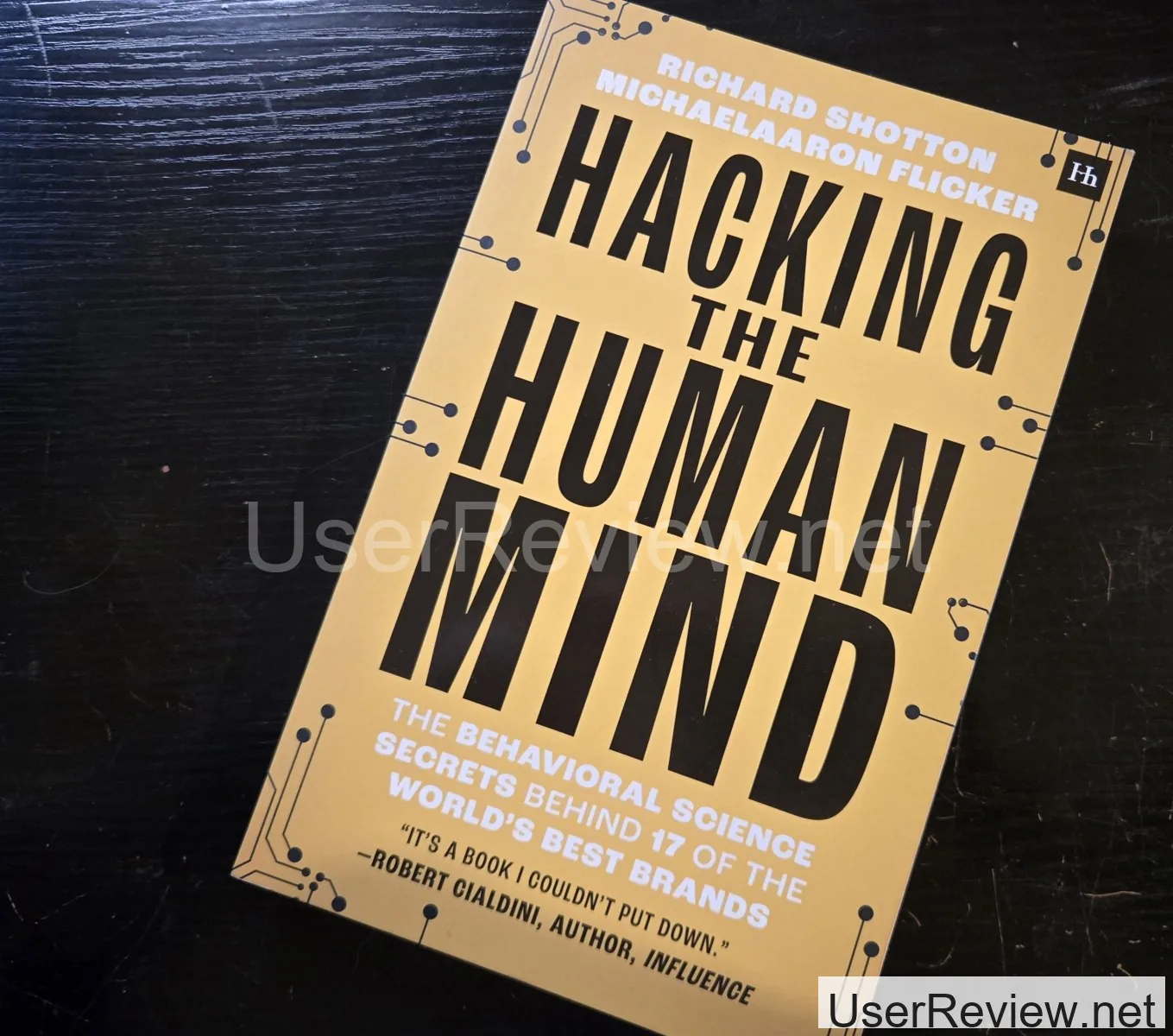
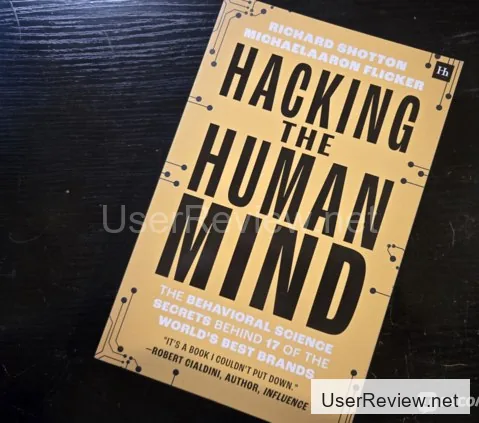
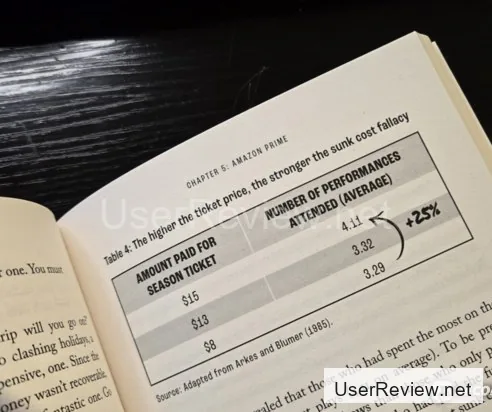

Editor's Summary
I dove headfirst into the world of neuromarketing with 'Hucking the Human', a book that reveals the sneaky ways brands manipulate our minds. What I learned was both fascinating and unsettling - from the power of storytelling to the art of creating emotional connections. This book is a game-changer for anyone looking to understand the psychology behind consumer behavior. It's not just about marketing; it's about understanding human nature. I'll be applying these insights to my own marketing strategies, and I think you should too.
Specifications
I've got to be honest, 'Hucking the Human Mind' blew my mind by revealing 52 secrets on why we get led astray. But let me tell you how I countered it and whether it's worth it.
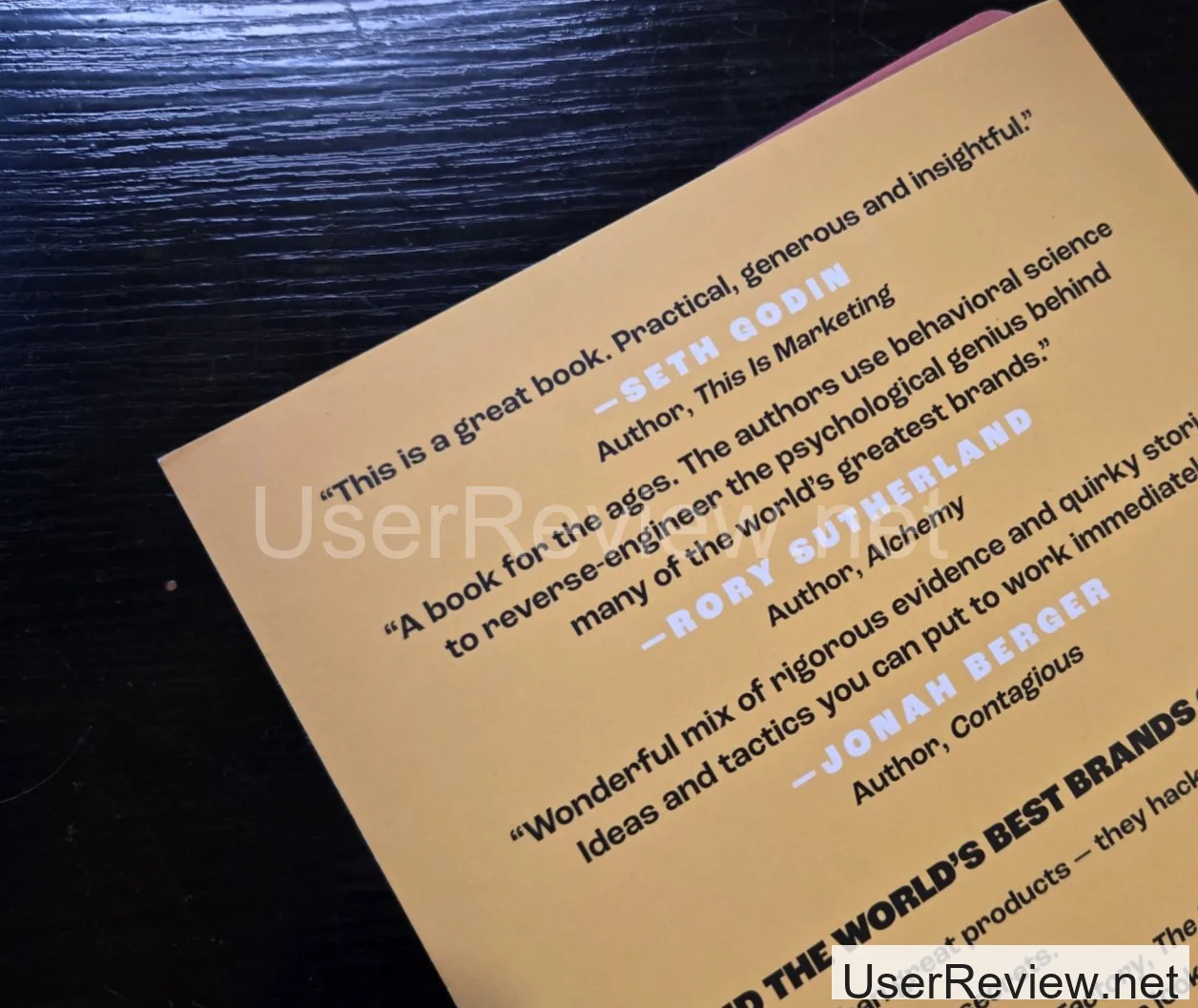
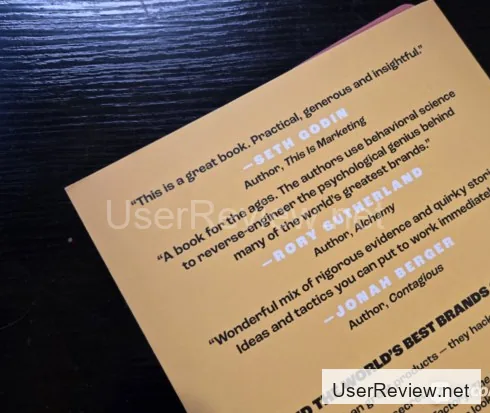
This book was a total game-changer for me. In fact, Seth Godin, the author of 'Purple Cow' and 'Differential or Die', recommends it as a book packed with practical insights, not just dry theory from psychologists.
What I loved most was that the authors don't just share successful stories like Apple, Dyson, and KFC, but they break down the psychological principles behind their success, and then they test it in a lab setting.
Yes, the book is in English, and it's a bestseller this year. I read it in the original, and I've got some insights to share with you.What worked, what didn't, why it worked, and can you replicate it for your brand?
This book is primarily for marketing directors, product and brand managers, and entrepreneurs who want to create more successful products. But it's also interesting for regular customers because after reading it, you'll start understanding how you're influenced, what triggers and tactics lead you to make a purchase.
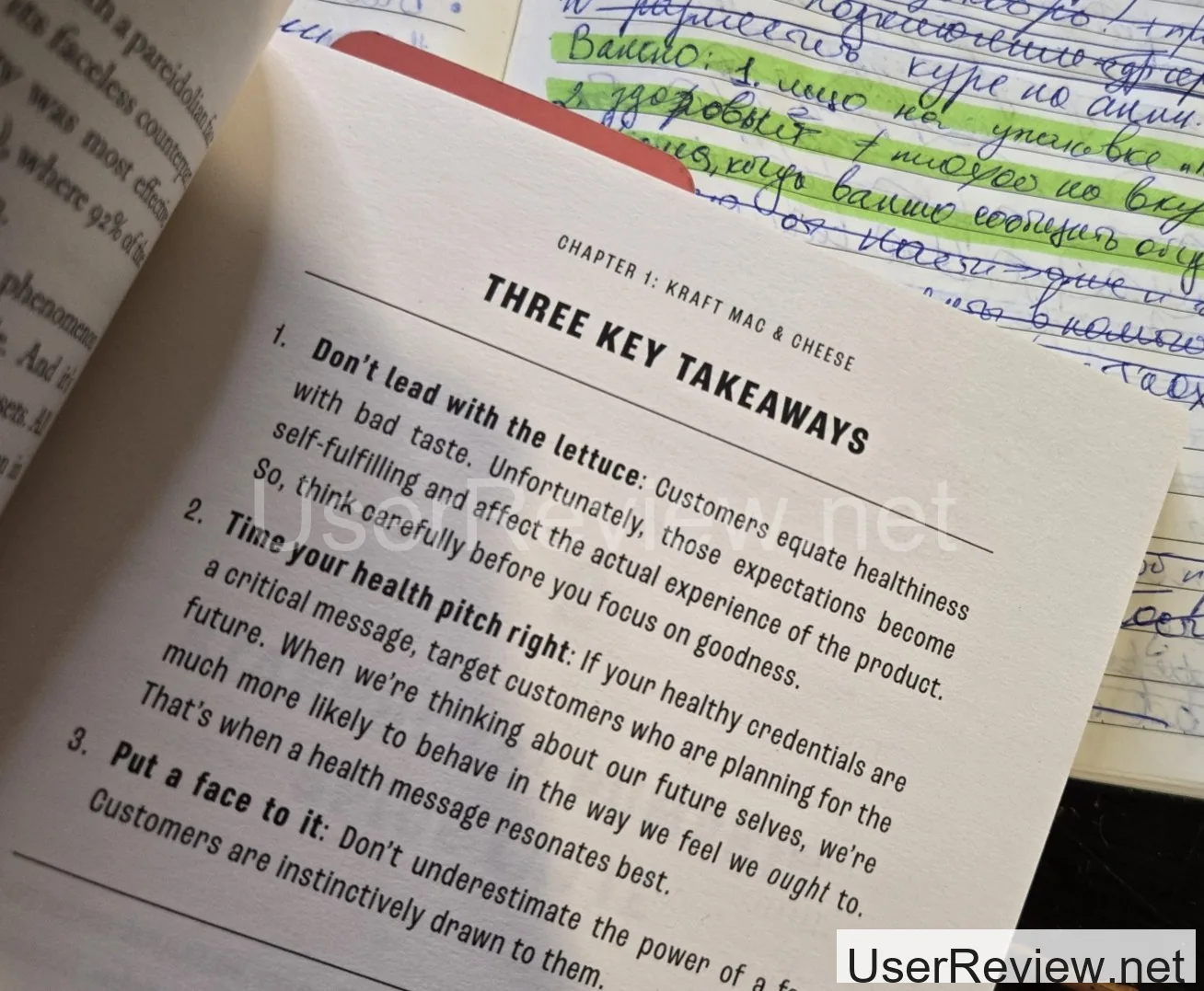
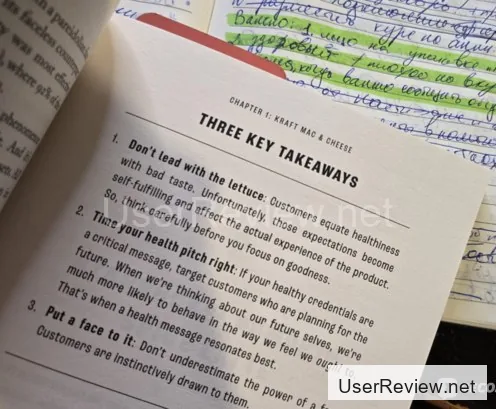
For example, this chapter is about the popular American product 'Mac & Cheese' - pasta with cheese in a package. And the author, after studying the history of this company, conducting experiments, and analyzing the results, concludes that:
1. Many people associate healthy with a bad taste, so in ads for healthy products, you should focus on taste and other appealing features.
2. You should choose the right time to announce changes, i.e., announce them so you don't lose existing customers and those who were planning to.
3. Use pareidolia on the packaging, i.e., when we see a face or figure in the arrangement of objects.
In a nutshell, what the book is about is essentially a collection of successful stories with explanations of why they became successful. Important note: not all principles from the book can be applied directly to real life - and that's okay.
I've been in marketing leadership roles for over 8 years, and in marketing itself for over 20. Even for me, this book had a lot of new and useful information - no surprise, given it's a book of the year.
How useful is this book? Of course, it's got some pretty standard concepts, like most people choosing the middle fries at McDonald's or the 9th option on the price list. I think that's old news.
But at the same time, the book has a lot of really strong and fresh ideas or concepts that the author looks at from a different angle:
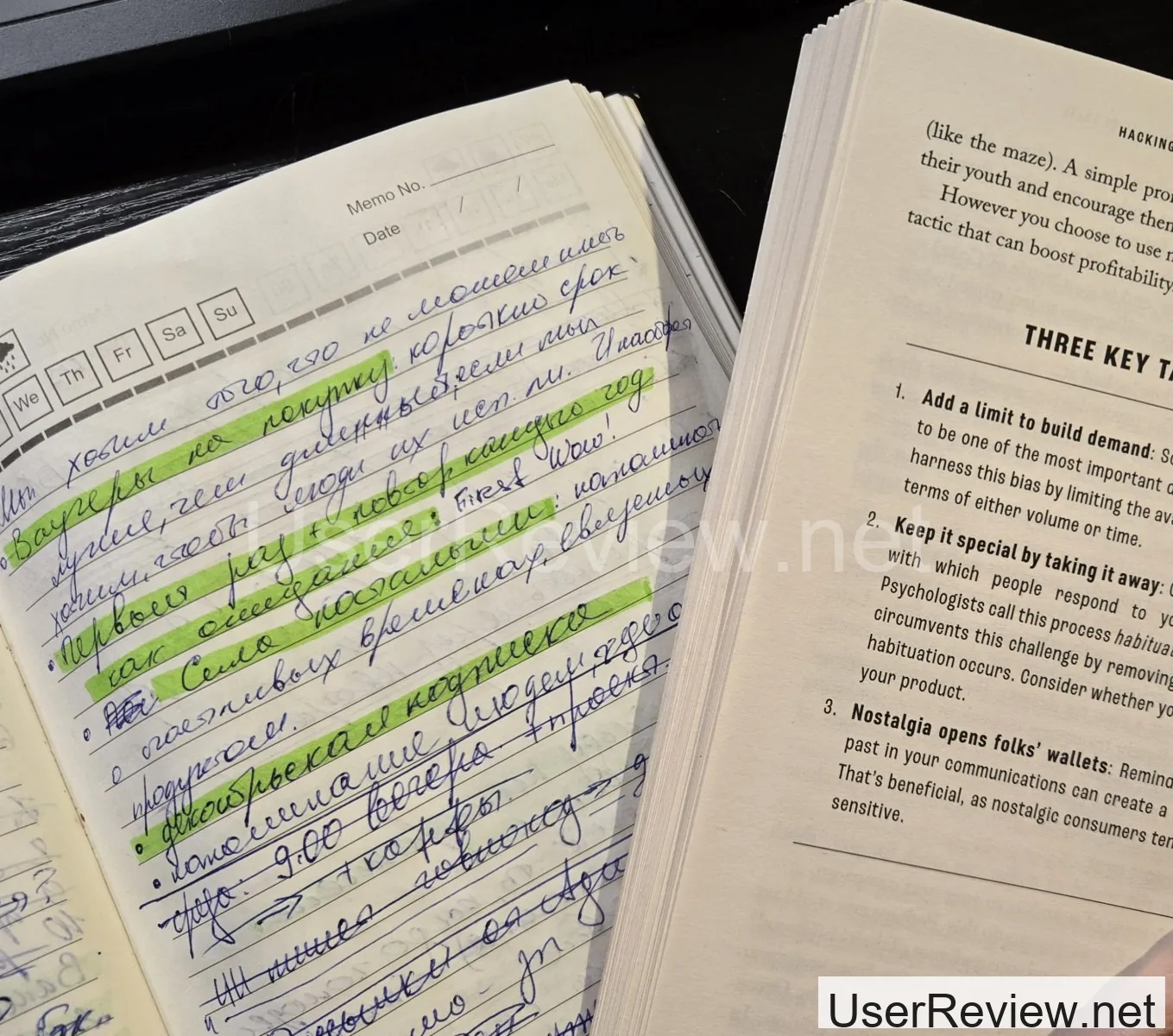
I've always known that doing seasonal things is a good idea because they sell well. But why? Is it just because they're seasonal? Nope! Seasonal limited-time offers sell well because:
1. We want what we can't have. And if we know something cool is about to be gone, we want it right away.
2. We've got warm memories from last year, and usually only the good stuff stays in our memory, so we'd love to recreate that awesome atmosphere.
3. If it's something cool and limited that's connected to our childhood memories, nostalgia kicks in and makes us want to buy it.
For example, when I worked at a soda factory, we'd always struggle to boost sales in winter until one genius young guy came up with the idea of creating a citrus-flavored soda with a hint of Christmas tree flavor. We'd support those sales every December.
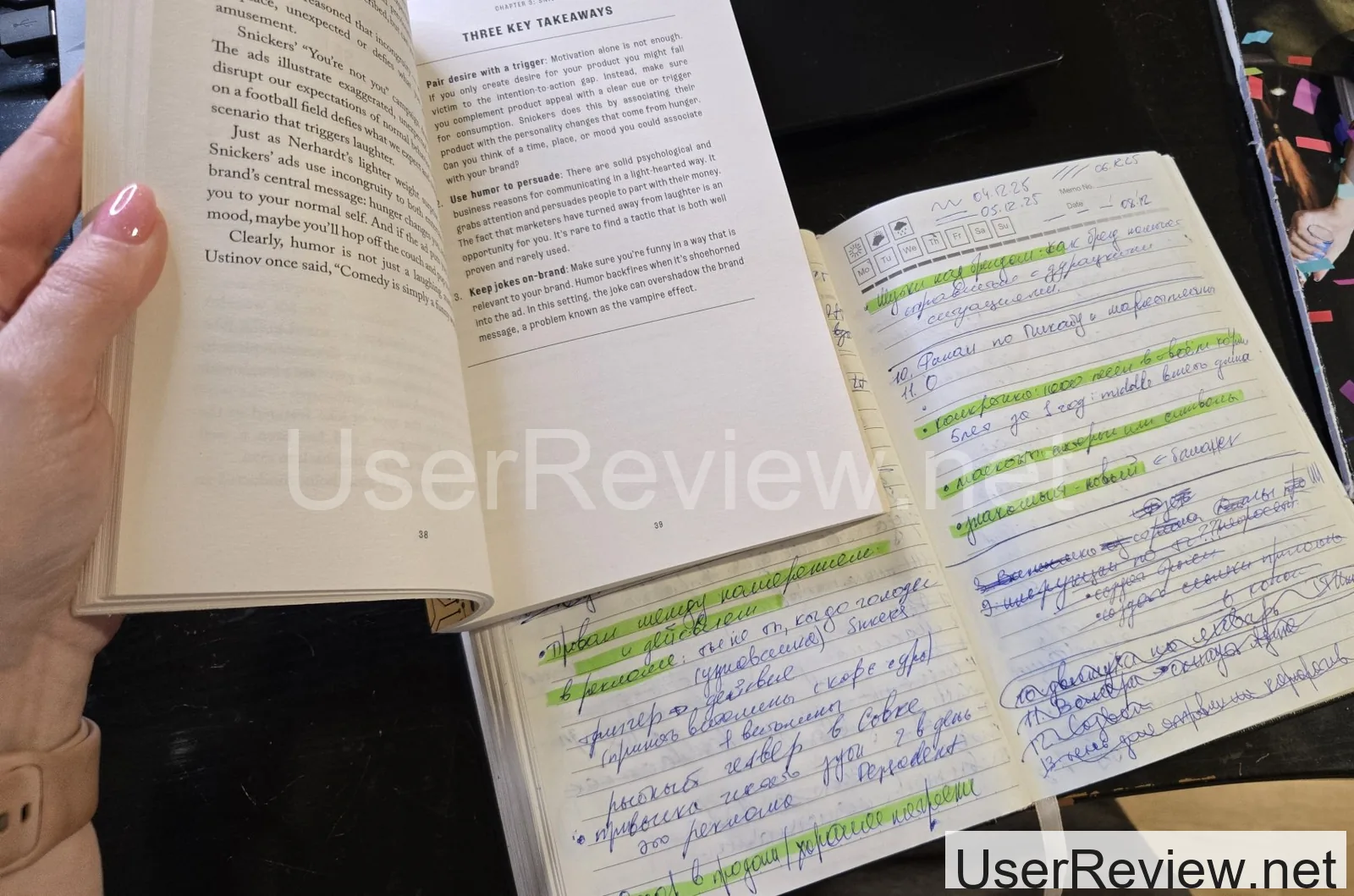
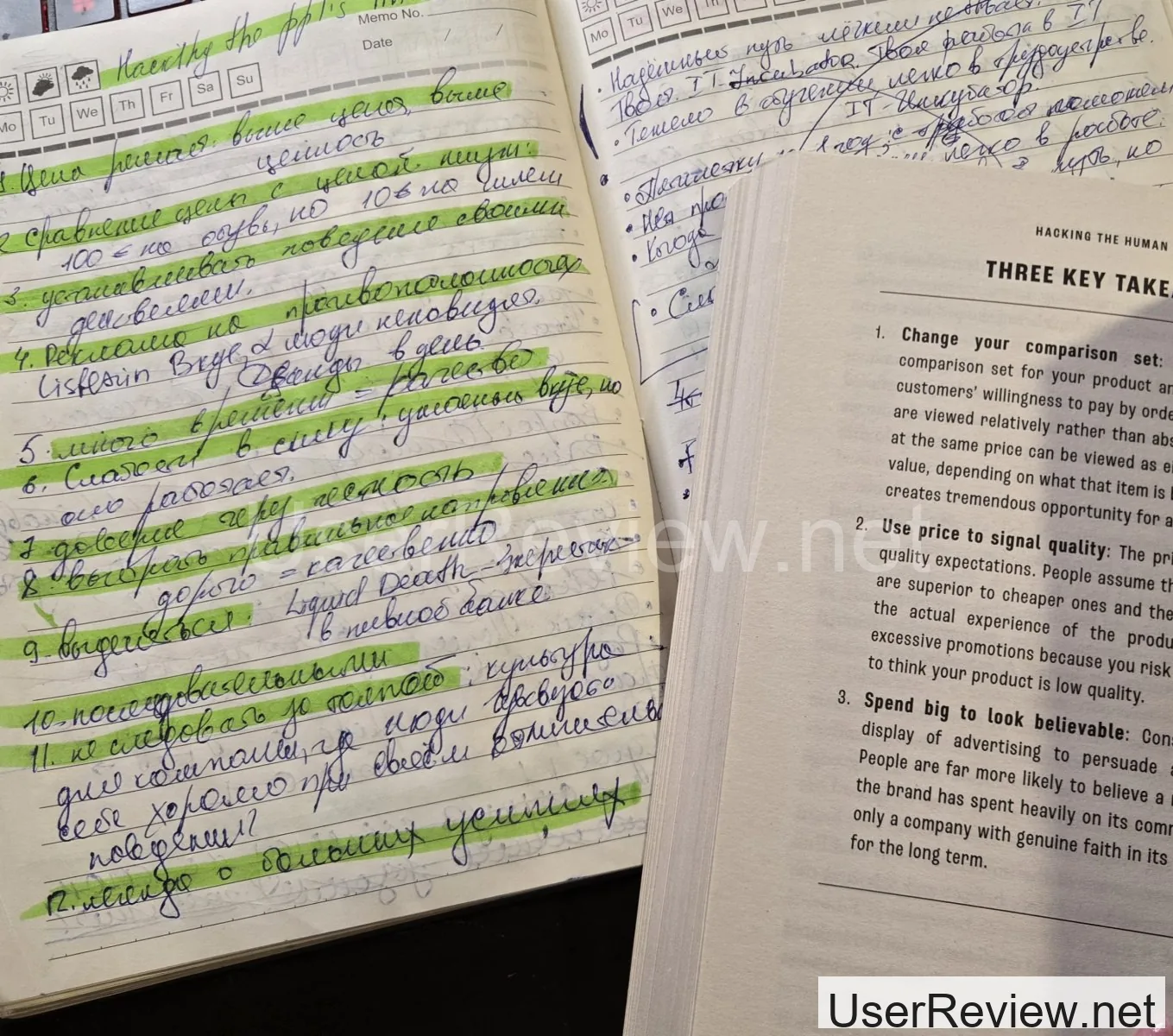
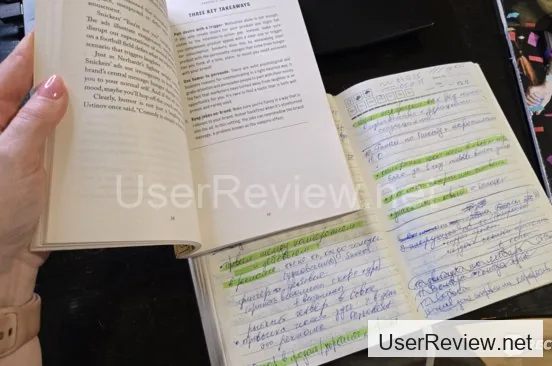
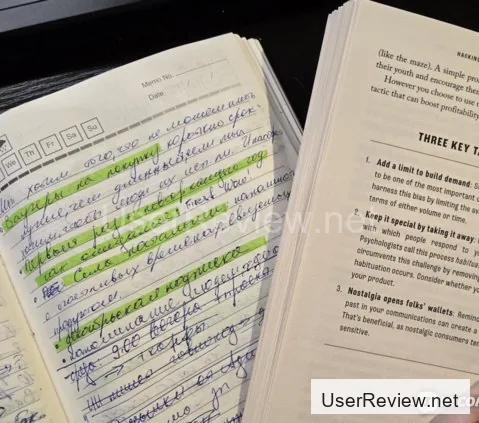
How to read this book? I found it super helpful to read this book with a notebook. On one page, I'd jot down ideas from the book, and on the other, I'd think about how to apply those ideas to my clients and employers.
For instance, I repositioned my employer to make it more contrasting and noticeable compared to our competitors, so only conscious people who want to become programmers would come to us.
What makes this book great? It fits really well with today's reality because the authors don't say 'do this,' they give you concepts, and then I'd think about how to adapt them to modern trends, channels, and audiences.
And, honestly, when I was reading it, I had a few painful insights. I realized where past companies I worked for went wrong: they wanted to cover more market share, but instead of giving a great product a good price, they watered it down with accessibility, delayed rewards for customers, or didn't use influencers, even though the product needed it.
I'm not sure if I can say that out loud to a marketing director, but that's the fact.
The main minus of the book is that the book focuses only on the most popular brands and what they did right, and doesn't always go into the details.
For example, when talking about Apple, the authors say that their iPod became popular thanks to an ad that said '5000 songs in one device.'
5000 songs in one device
Yes, Apple perfectly captured the idea and value for the customer, that they wouldn't have to carry around a huge MP3 player with a disc that could only hold 100 songs. And indeed, back then it was a game-changer. But they didn't mention:
the importance of timing, there's a theory that being on time is crucial, i.e. the iPod came out right at the cusp of the MP3 disc player era and the advent of flash drives, so it logically had to be a device that could feed songs straight into your ears.the massive ad budgets that can sell anything.the status of the devicethe influence of the brandOr in the chapter about Guinness, the authors say that this beer sold well without ads for 170 years, and only later did they decide to launch an ad campaign that
cleverly played on the long wait time in pubs with the phrase: 'all good things take time'
Who among us has a company that's been around for over 100 years? I know maybe 3-5 manufacturers in all of Russia who can boast such a status and still feel pretty good about themselves. And they completely ignore the fact that Guinness got a new lease on life thanks to the book of records, a brand they sold and made a bit of extra money from.
However, I can say that the following really works:
1. reflecting people's habits in ads, as the ads become more 'sticky' and the product more 'memorable.'
2. demonstrating exceptional product capabilities: 1500+ hours of lessons for 600 rubles a day.
Main takeaway from the book is that this book is worth reading and implementing immediately, testing ideas based on concepts, checking how the audience reacts. Because from one concept, you can extract a huge number of ideas that only start working when you try them out in practice.
For example, who says the same thing is also important.
You can test:
1. employees telling you how the business works from the inside
2. the founder telling you what they do with their business to make people's lives better.
3. testing influencers who are close to your brand spirit and don't have a 'demise' on the horizon (i.e. their behavior hasn't been called into question).
4. customer reviews, as representatives of your target audience.
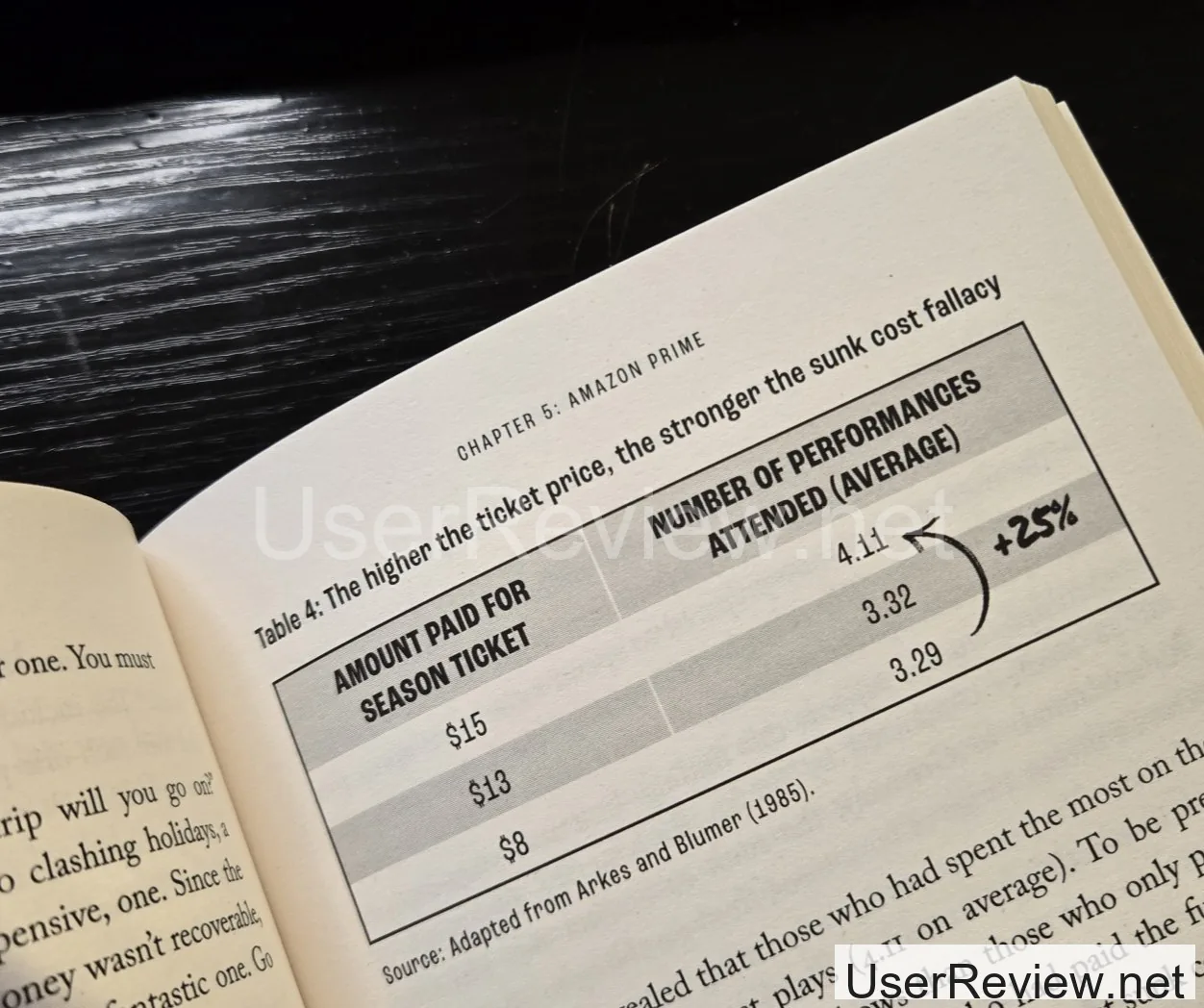
Or for example, showing people not only what they get, but also what they lose. For instance, when buying courses, you've probably seen those price tables with pluses showing what you get, and huge crosses showing what you lose. This is necessary so you buy the more expensive tariff.
In general, from the bottom of my heart, I recommend reading this book as a visual guide to customer behavior.
How customers can counter 'catchphrases' from brands? For example, pay close attention to yourself and ask yourself questions:
1. am I buying a medium-sized fries because I really want that much fries, or am I being led by a good offer?
2. I end up buying three packs of sugar because I genuinely need them, or because the store's got a limit of four packs per person due to some weird panic buying thing.
3. I'm only buying this because I really need it, or because I've been convinced I'll lose out if I don't.